
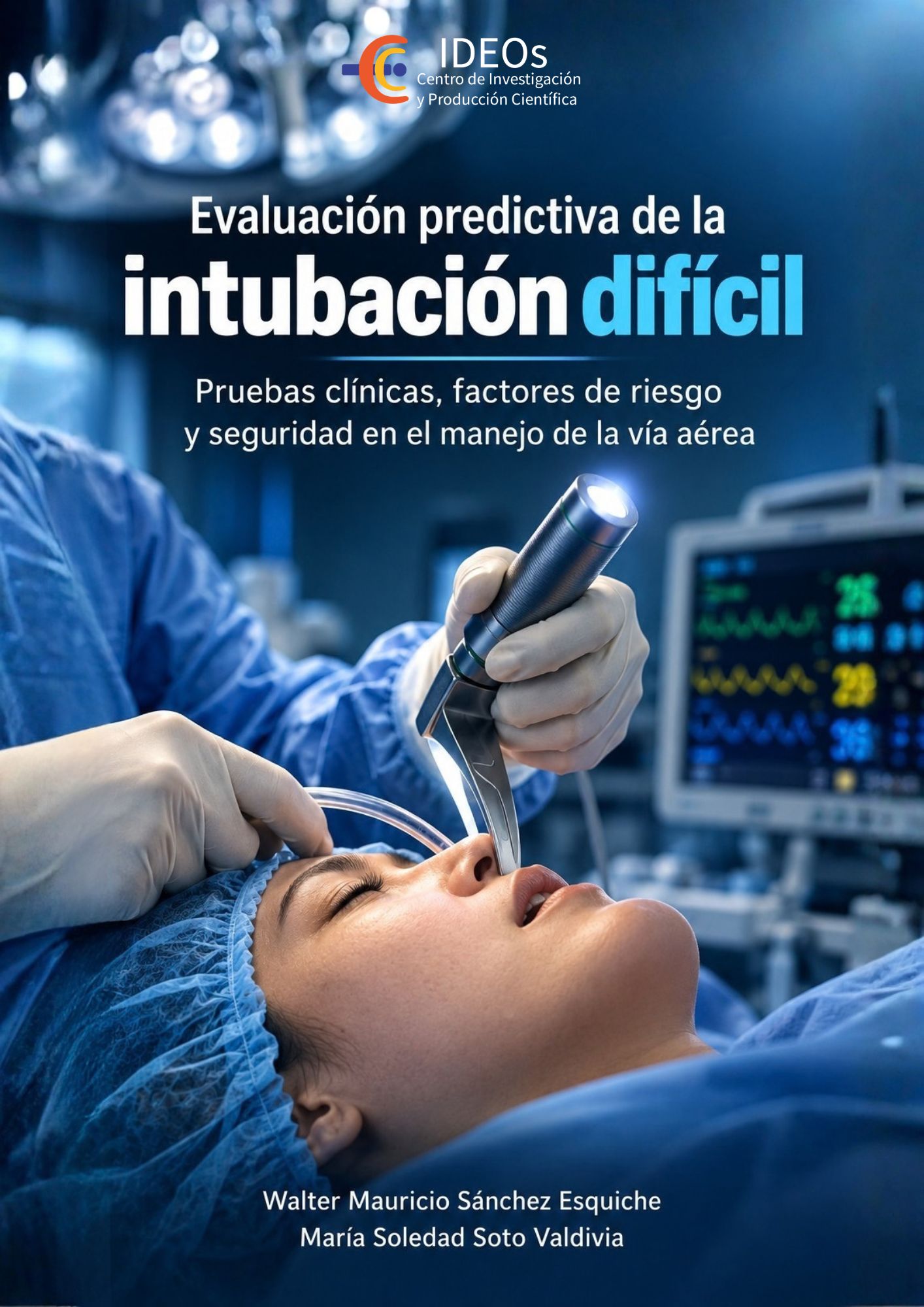
Evaluación predictiva de la intubación difícil
Pruebas clínicas, factores de riesgo y seguridad en el manejo de la vía aérea
Abstract
La vía aérea representa uno de los territorios en los que la medicina perioperatoria muestra con mayor claridad la relación entre conocimiento anatómico, probabilidad clínica, tecnología y capacidad de respuesta ante eventos de alto impacto. La seguridad de un paciente sometido a anestesia general no depende únicamente de dominar una técnica de intubación: exige reconocer, antes de inducir la pérdida de conciencia, qué rasgos anuncian dificultad, qué condiciones fisiológicas reducen el margen de seguridad y qué alternativas deben estar preparadas si el plan inicial falla.
La predicción de la vía aérea difícil ha recorrido un trayecto que va desde la observación de rasgos anatómicos relativamente simples hasta modelos integrados que combinan historia clínica, exploración física, mediciones antropométricas, ultrasonido, videolaringoscopia y, de forma emergente, herramientas de inteligencia artificial. Ese avance no ha eliminado la incertidumbre. Las pruebas de cabecera conservan limitaciones de sensibilidad, la prevalencia modifica el rendimiento predictivo y los resultados dependen de la población, del operador y de la definición de dificultad empleada. Precisamente por ello, la interpretación clínica debe superar la lógica de “una prueba que decide” y avanzar hacia un enfoque probabilístico y multimodal.
El valor de estudiar estos problemas en poblaciones concretas es particularmente alto. La extrapolación automática de puntos de corte o de prevalencias obtenidas en otros contextos puede producir una falsa sensación de precisión. Los datos obtenidos en Tacna aportan evidencia situada sobre adultos sometidos a anestesia general y permiten discutir cómo edad, obesidad y clasificación de Mallampati se relacionan con la dificultad observada durante la laringoscopia. Más allá del dato local, ofrecen una plataforma para reflexionar sobre validez diagnóstica, concordancia entre pruebas y toma de decisiones perioperatorias.
Esta obra se propone articular esas dimensiones. No está concebida como un manual de procedimientos ni como una reproducción de una tesis, sino como una lectura científica del problema: anatomía funcional, predicción, epidemiología, utilidad diagnóstica, tecnología, factores fisiológicos, evidencia del caso de estudio y perspectivas de investigación. En un campo donde el tiempo de respuesta puede ser breve y las consecuencias de un error pueden ser graves, la preparación intelectual y organizacional forma parte de la seguridad clínica.
References
Adnet, F., Borron, S. W., Racine, S. X., et al. (1997). The Intubation Difficulty Scale (IDS): Proposal and evaluation of a new score characterizing the complexity of endotracheal intubation. Anesthesiology, 87(6), 1290–1297.
Ahmad, I., El-Boghdadly, K., Bhagrath, R., et al. (2020). Difficult Airway Society guidelines for awake tracheal intubation (ATI) in adults. Anaesthesia, 75(4), 509–528. https://doi.org/10.1111/anae.14904
Ahmad, I., El-Boghdadly, K., Iliff, H., et al. (2026). Difficult Airway Society 2025 guidelines for management of unanticipated difficult tracheal intubation in adults. British Journal of Anaesthesia, 136(1), 283–307. https://doi.org/10.1016/j.bja.2025.10.006
Alemayehu, T., Sitot, M., Zemedkun, A., Tesfaye, S., Angasa, D., & Abebe, F. (2022). Assessment of predictors for difficult intubation and laryngoscopy in adult elective surgical patients at Tikur Anbessa Specialized Hospital, Ethiopia: A cross-sectional study. Annals of Medicine and Surgery, 77, 103682.
Alsabri, M., Abdelwahab, O. A., Elsnhory, A. B., et al. (2024). Video laryngoscopy versus direct laryngoscopy in achieving successful emergency endotracheal intubations: A systematic review and meta-analysis of randomized controlled trials. Systematic Reviews, 13, 85. https://doi.org/10.1186/s13643-024-02500-9
Apfelbaum, J. L., Hagberg, C. A., Connis, R. T., et al. (2022). 2022 American Society of Anesthesiologists practice guidelines for management of the difficult airway. Anesthesiology, 136(1), 31–81. https://doi.org/10.1097/ALN.0000000000004002
Ayenew, A. D., Melkie, T. B., Arefayne, N. R., Degu, Z. A., & Admassie, B. M. (2024). Airway management and ventilation strategy among obese adult patients: A comprehensive review and analysis. Annals of Medicine & Surgery. https://doi.org/10.1097/MS9.0000000000002788
Azam, S., Khan, Z. Z., Shahbaz, H., et al. (2024). Video versus direct laryngoscopy for intubation: Updated systematic review and meta-analysis. Cureus, 16(1), e51720. https://doi.org/10.7759/cureus.51720
Bhargava, V., Rockwell, N. A., Tawfik, D., Haileselassie, B., Petrisor, C., & Su, E. (2023). Prediction of difficult laryngoscopy using ultrasound: A systematic review and meta-analysis. Critical Care Medicine, 51(1), 117–126. https://doi.org/10.1097/CCM.0000000000005711
Carron, M., Linassi, F., & Ieppariello, G. (2021). Videolaryngoscopy versus direct laryngoscopy for patients with obesity requiring tracheal intubation: A meta-analysis. Obesity Surgery, 31(7), 3327–3329. https://doi.org/10.1007/s11695-021-05357-2
Chen, W., Tian, T., Li, X., Jiang, T., & Xue, F. (2022). Use of the thyromental height test for prediction of difficult laryngoscopy: A systematic review and meta-analysis. Journal of Clinical Medicine, 11(16), 4906. https://doi.org/10.3390/jcm11164906
Cook, T. M., Woodall, N., & Frerk, C. (2011). Major complications of airway management in the UK: Results of the Fourth National Audit Project. British Journal of Anaesthesia, 106(5), 617–631.
Cormack, R. S., & Lehane, J. (1984). Difficult tracheal intubation in obstetrics. Anaesthesia, 39(11), 1105–1111. https://doi.org/10.1111/j.1365-2044.1984.tb08932.x
de Carvalho, C. C., Santos Neto, J. M., & de Orange, F. A. (2023). Predictive performance of thyromental height for difficult laryngoscopies in adults: A systematic review and meta-analysis. Brazilian Journal of Anesthesiology, 73(4), 491–499. https://doi.org/10.1016/j.bjane.2021.06.015
Emik, E., Gümüs-Özcan, F., Demirgan, S., & Selcan, A. (2021). Evaluation of the correlation between preoperative airway assessment tests, anthropometric measurements, and endotracheal intubation difficulty in obesity class III patients undergoing bariatric surgery. Medicine, 100(36), e27188. https://doi.org/10.1097/MD.0000000000027188
Gaszynski, T., & McKechnie, A. (2022). Pre-oxygenation and apneic oxygenation in patients living with obesity: A review of novel techniques. Saudi Journal of Anaesthesia, 16(3), 322–326. https://doi.org/10.4103/sja.sja_351_22
Hansel, J., Rogers, A. M., Lewis, S. R., Cook, T. M., & Smith, A. F. (2022). Videolaryngoscopy versus direct laryngoscopy for adults undergoing tracheal intubation. Cochrane Database of Systematic Reviews, 4, CD011136. https://doi.org/10.1002/14651858.CD011136.pub3
Kamal, K., Rani, D., Ahlawat, G., & Bansal, T. (2023). Prediction of difficult endotracheal intubation by different bedside tests: An observational study. Bali Journal of Anesthesiology, 7(1), 8–12.
Landis, J. R., & Koch, G. G. (1977). The measurement of observer agreement for categorical data. Biometrics, 33(1), 159–174.
Law, J. A., Duggan, L. V., Asselin, M., et al. (2021a). Canadian Airway Focus Group updated consensus-based recommendations for management of the difficult airway: Part 1. Difficult airway management encountered in an unconscious patient. Canadian Journal of Anesthesia, 68, 1373–1404. https://doi.org/10.1007/s12630-021-02007-0
Law, J. A., Duggan, L. V., Asselin, M., et al. (2021b). Canadian Airway Focus Group updated consensus-based recommendations for management of the difficult airway: Part 2. Planning and implementing safe management of the patient with an anticipated difficult airway. Canadian Journal of Anesthesia, 68, 1405–1436. https://doi.org/10.1007/s12630-021-02008-z
Mallampati, S. R., Gatt, S. P., Gugino, L. D., et al. (1985). A clinical sign to predict difficult tracheal intubation: A prospective study. Canadian Anaesthetists’ Society Journal, 32, 429–434.
McDougall, G. G., Flindall, H., Forestell, B., et al. (2024). Direct laryngoscopy versus video laryngoscopy for intubation in critically ill patients: A systematic review, meta-analysis, and trial sequential analysis of randomized trials. Critical Care Medicine, 52(11), 1674–1685. https://doi.org/10.1097/CCM.0000000000006402
Mosier, J. (2024). The physiologically difficult airway and management considerations. Current Anesthesiology Reports, 14, 446–457. https://doi.org/10.1007/s40140-024-00629-w
Nedunchezhian, V., Nedunchezhian, I., & Van Zundert, A. (2023). Clinically preferred videolaryngoscopes in airway management: An updated systematic review. Healthcare, 11(17), 2383. https://doi.org/10.3390/healthcare11172383
Oria, M. S., Halimi, S. A., Negin, F., & Asady, A. (2022). Predisposing factors of difficult tracheal intubation among adult patients in Aliabad Teaching Hospital in Kabul, Afghanistan: A prospective observational study. International Journal of General Medicine, 15, 1161–1169.
Panjiar, P., Bhat, K., Yousuf, I., Kochhar, A., & Ralli, T. (2021). Study comparing different airway assessment tests in predicting difficult laryngoscopy: A prospective study in geriatric patients. Indian Journal of Anaesthesia, 65(4), 309.
Perkins, E. J., Begley, J. L., Brewster, F. M., et al. (2022). The use of video laryngoscopy outside the operating room: A systematic review. PLOS ONE, 17(10), e0276420. https://doi.org/10.1371/journal.pone.0276420
Quintão, V. C., Carvalho, V. H., da Costa, L. G. V., et al. (2023). Videolaryngoscopy in anesthesia and perioperative medicine: Innovations, challenges, and best practices. Brazilian Journal of Anesthesiology, 73(5), 525–528. https://doi.org/10.1016/j.bjane.2023.08.003
Ravindran, B. (2023). Innovations in the management of the difficult airway: A narrative review. Cureus, 15(2), e35117. https://doi.org/10.7759/cureus.35117
Roth, D., Pace, N. L., Lee, A., et al. (2019). Bedside tests for predicting difficult airways: An abridged Cochrane diagnostic test accuracy systematic review. Anaesthesia, 74(7), 915–928.
Society for Obesity and Bariatric Anaesthesia Working Group. (2025). Airway management in patients living with obesity: Best practice recommendations. Anaesthesia, 80(9), 1103–1114. https://doi.org/10.1111/anae.16647
Soni, V. M., Pappu, A., Zarabi, S., et al. (2025). Point-of-care ultrasound of the upper airway in difficult airway management: A systematic review and meta-analysis. Anaesthesia, 80(12), 1556–1567. https://doi.org/10.1111/anae.16751
Sánchez Esquiche, W. M. (2024). Concordancia entre los factores predictores de vía aérea difícil con intubación difícil en adultos sometidos a cirugía bajo anestesia general en un hospital público, 2022 [Tesis doctoral, Universidad Nacional Jorge Basadre Grohmann]. Repositorio Institucional UNJBG. https://repositorio.unjbg.edu.pe/handle/20.500.12510/4469
Sánchez, M., & Segovia, M. (2019). Correlación de predictores de vía aérea difícil con los grados de laringoscopía en pacientes de 18 a 65 años que acuden al Hospital Enrique Garcés para cirugía, periodo 2018–2019 [Tesis]. Pontificia Universidad Católica del Ecuador.
Tang, X., Dong, Z., Xu, J., et al. (2023). Observation of the validity of the upper lip bite test in predicting difficult intubation. Scientific Reports, 13, 22160. https://doi.org/10.1038/s41598-023-49642-9
Tsan, S. E. H., Viknaswaran, N. L., Lau, J., Cheong, C. C., & Wang, C. (2022). Effectiveness of preoxygenation during endotracheal intubation in a head-elevated position: A systematic review and meta-analysis of randomized controlled trials. Anaesthesiology Intensive Therapy, 54(5), 413–424. https://doi.org/10.5114/ait.2022.123197
Yemam, D., Melese, E., & Ashebir, Z. (2022). Comparison of modified Mallampati classification with Cormack and Lehane grading in predicting difficult laryngoscopy among elective surgical patients who took general anesthesia. Annals of Medicine and Surgery, 79, 103912.
Wang, Z., Jin, Y., Zheng, Y., Chen, H., Feng, J., & Sun, J. (2024). Evaluation of preoperative difficult airway prediction methods for adult patients without obvious airway abnormalities: A systematic review and meta-analysis. BMC Anesthesiology, 24, 242. https://doi.org/10.1186/s12871-024-02627-1
Downloads
Published
How to Cite
Issue
Section
License

This work is licensed under a Creative Commons Attribution 4.0 International License.
This license allows others to redistribute, remix, tweak, and build upon your work, even with commercial penalties, as long as you take credit for the original creation. This is the most helpful license offered. Recommended for maximum dissemination and use of the materials subject to the license.


